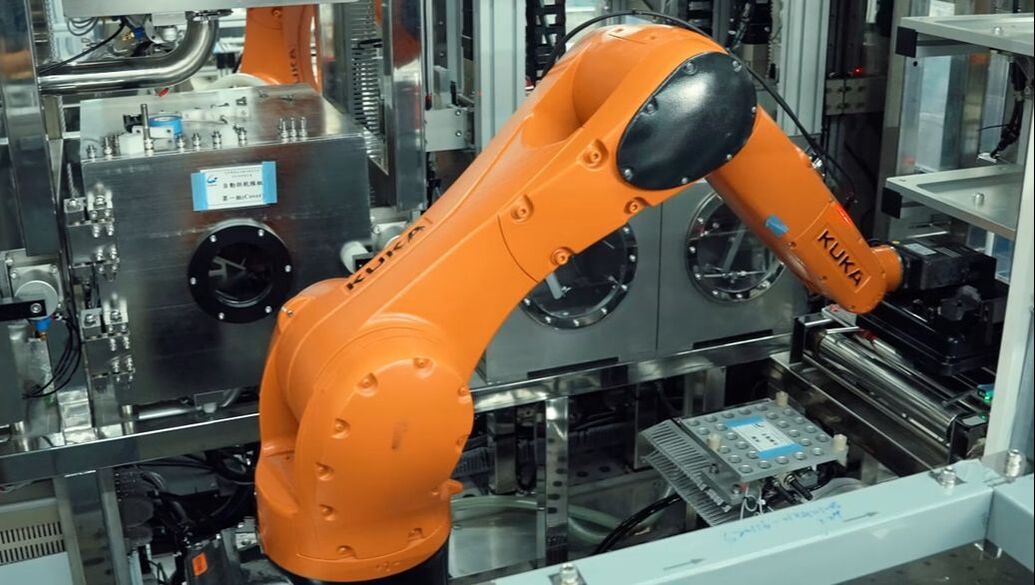
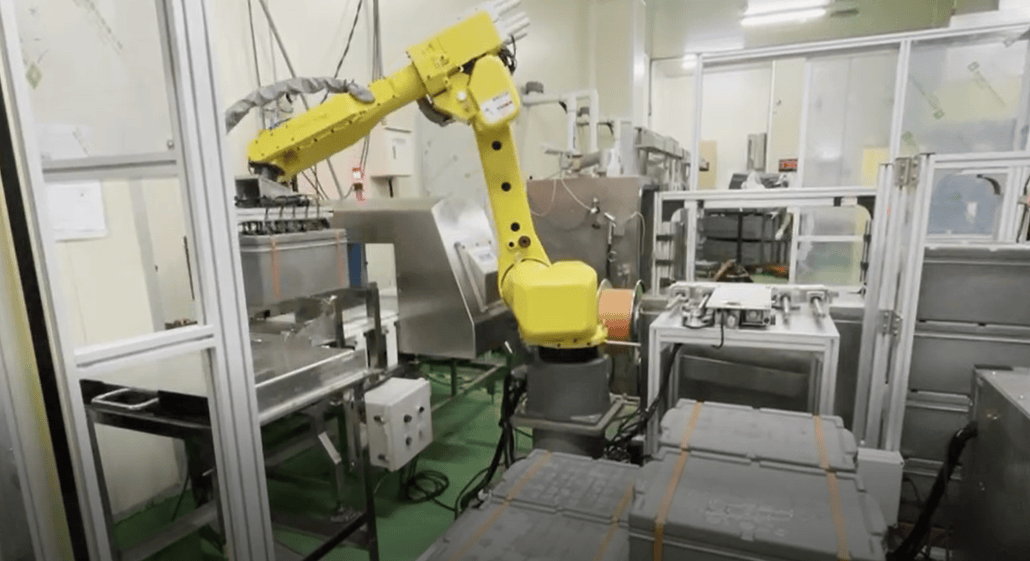
Co-engineered with our customers — from process design through to production handover. With Physical AI at the centre, we embed AI decision-making into automation equipment and build lines that keep running, tailored to seven major sectors.
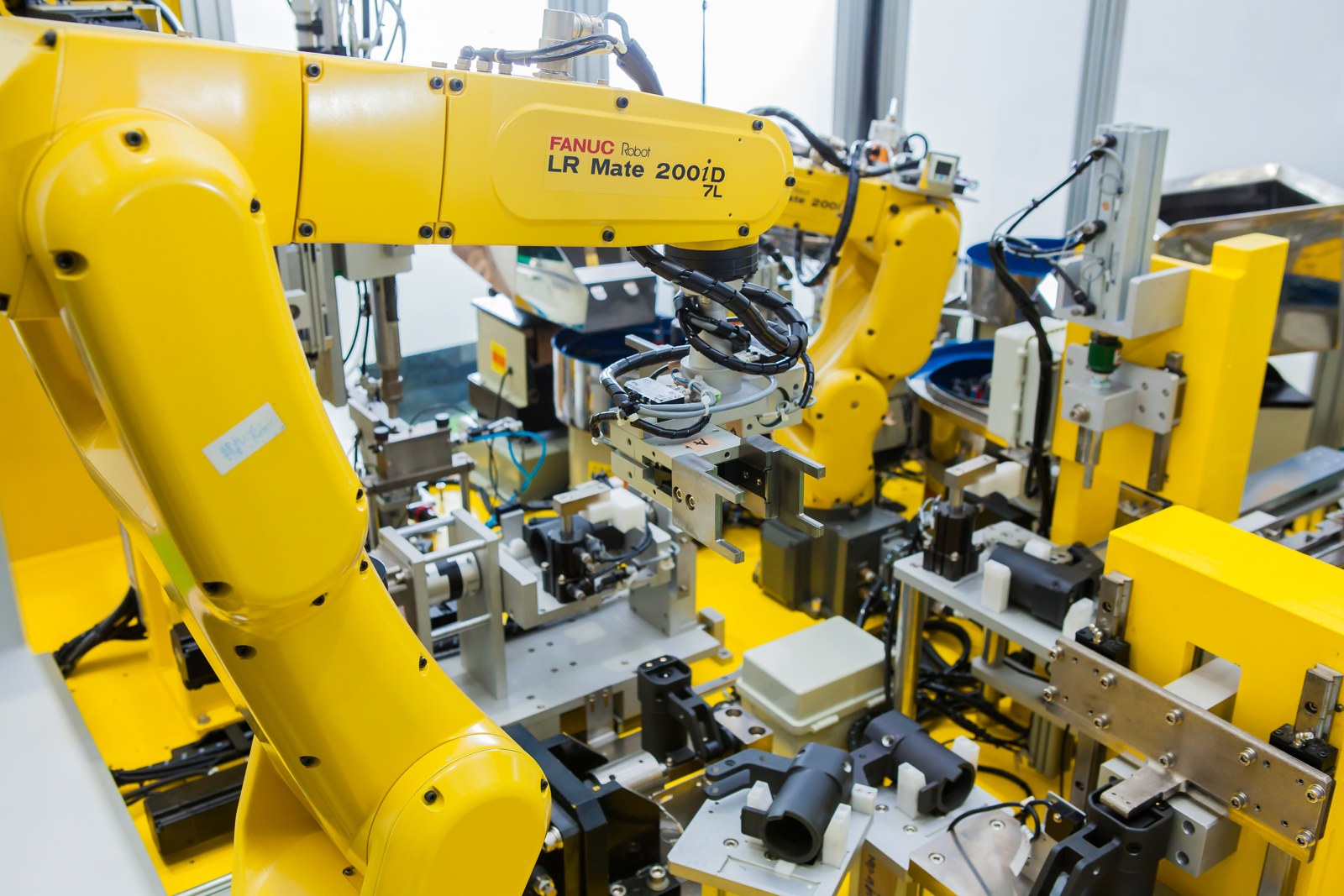
Assembly ASSEMBLY
Robotic assembly cells, screw fastening, parts feeding and poka-yoke verification, supporting mixed-model production.
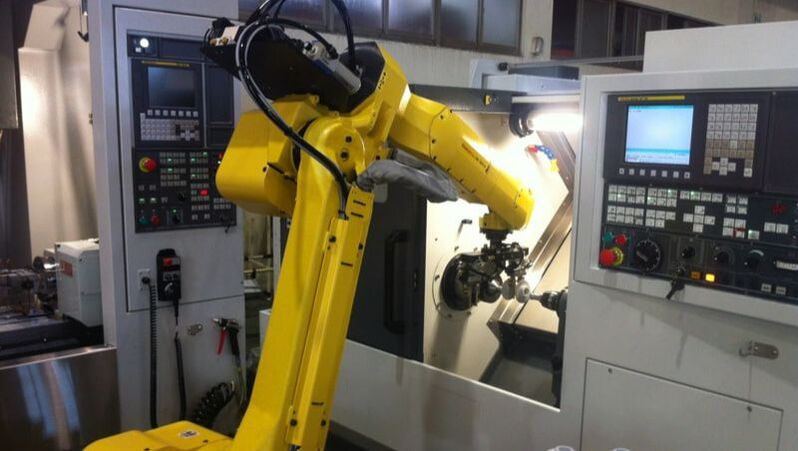
Machining MACHINING
CNC load/unload, deburring, grinding and polishing cells, with AI vision for pick-position correction and quality verification.
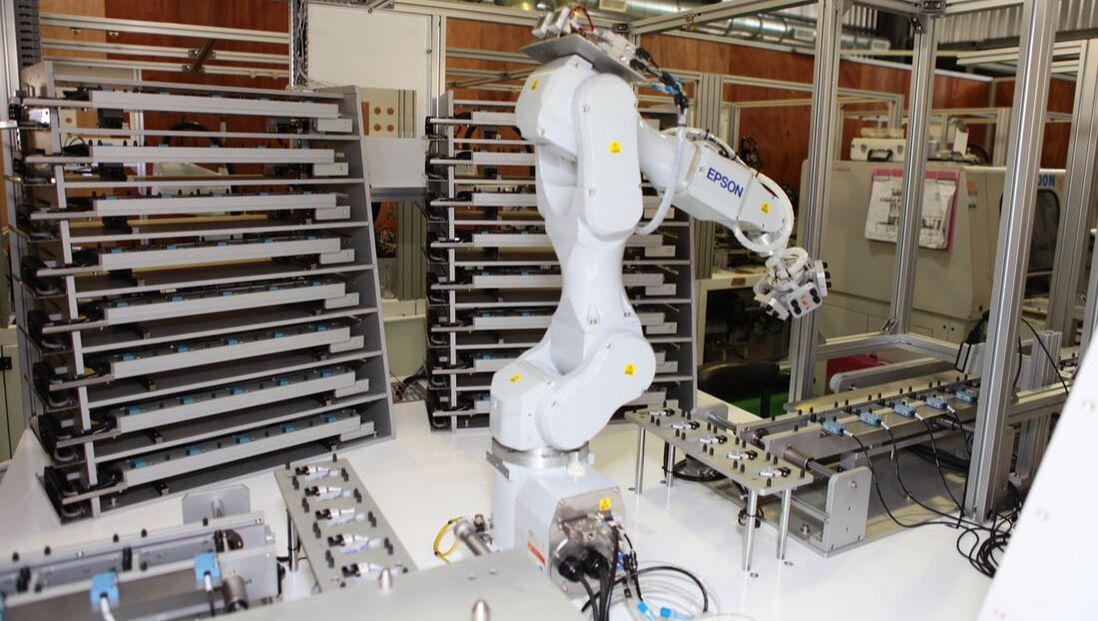
ICT ICT
Electronics assembly, test-fixture automation and cosmetic inspection, built for high takt rates and frequent changeovers.
Chemical CHEMICAL
Robots replacing hazardous and repetitive work; material handling and charging automation that protects both safety and uptime.
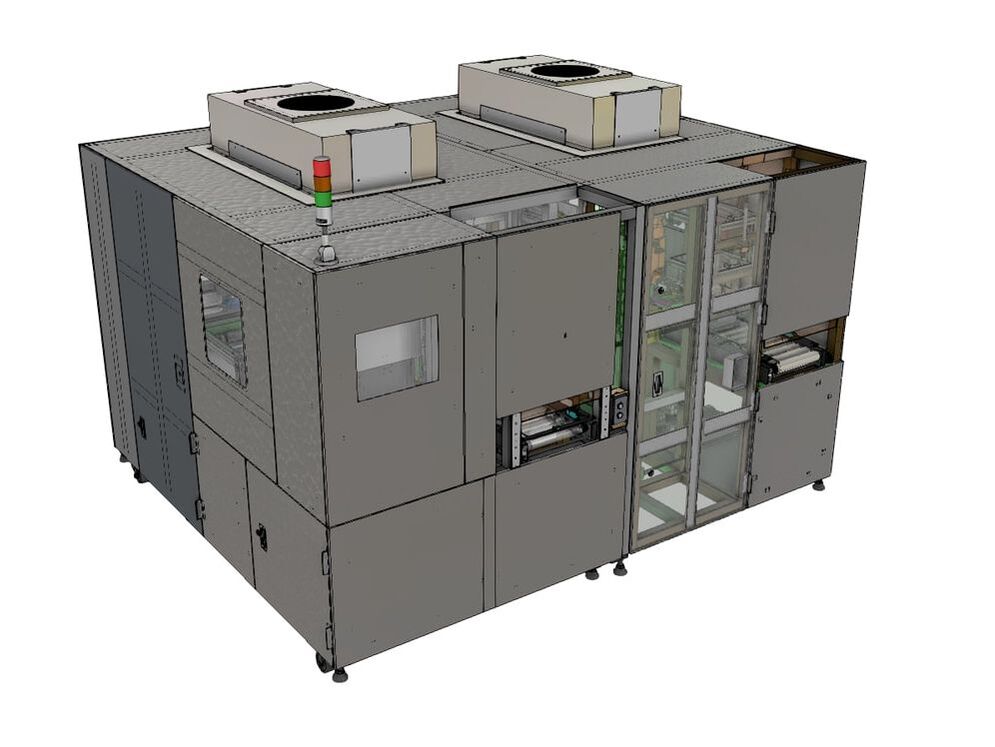
Semiconductor SEMICONDUCTOR
Cleanroom-grade handling and inspection automation, with precision positioning and micro-defect detection.
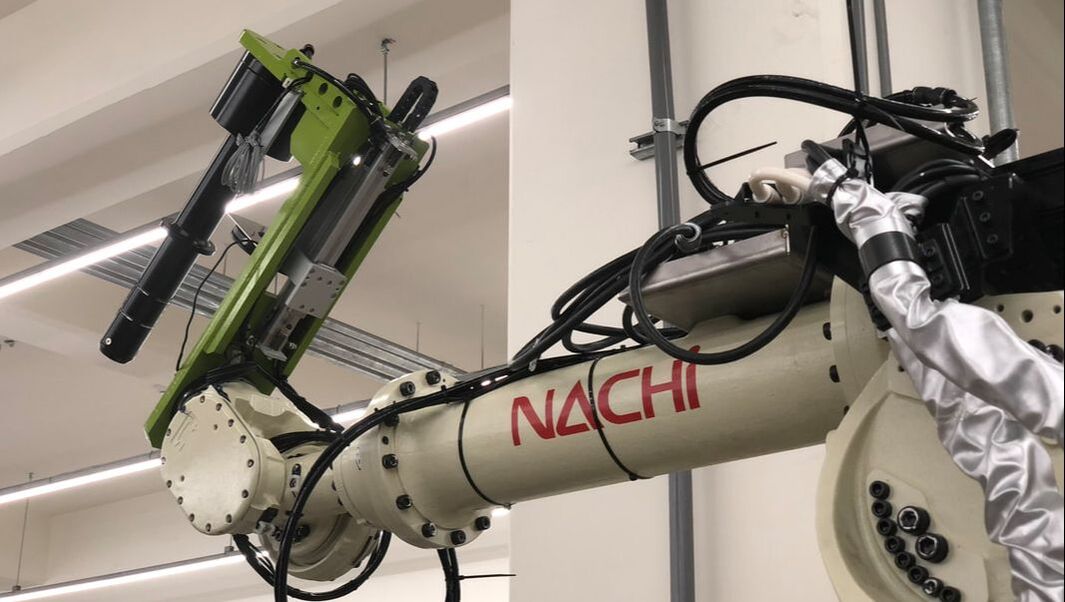
Automotive AUTOMOTIVE
Welding, assembly and inspection lines for bodies and components; large-scale robot system integration.
Food & Beverage FOOD_BEVERAGE
Sorting, packaging and quality inspection automation for food lines, designed to hygiene standards.
Smart Logistics
Smart logistics: mobility for intelligent robots
Built on more than 50 AMR projects — combining autonomous mobile robots with AI vision and scheduling systems to make material movement the most dependable link in a plant or a hospital. The team also builds fleet control systems and integrates large language models (LLM).
Factory applications FACTORY
AMR fleet dispatch, machine load/unload shuttling, warehouse and line-side material movement. Integrated with MES and scheduling systems, with AI vision for part recognition and exception reporting — at changeover you change the task, not the line.
Healthcare applications HEALTHCARE
Autonomous transport of specimens, medication and supplies inside hospitals. Safe navigation in narrow corridors shared with people, integrated with traffic control and lifts, cutting staff walking time so professionals stay on professional work. Deployments include the Taipei Blood Center and other medical sites.
Simulation-First Delivery
How we develop automation equipment
Simulation-first delivery: work out the answer in the virtual environment before the first machine moves.
Requirements survey
Gather data on product, process and quality priorities; confirm the requirement and the payback period.
Digital proposal
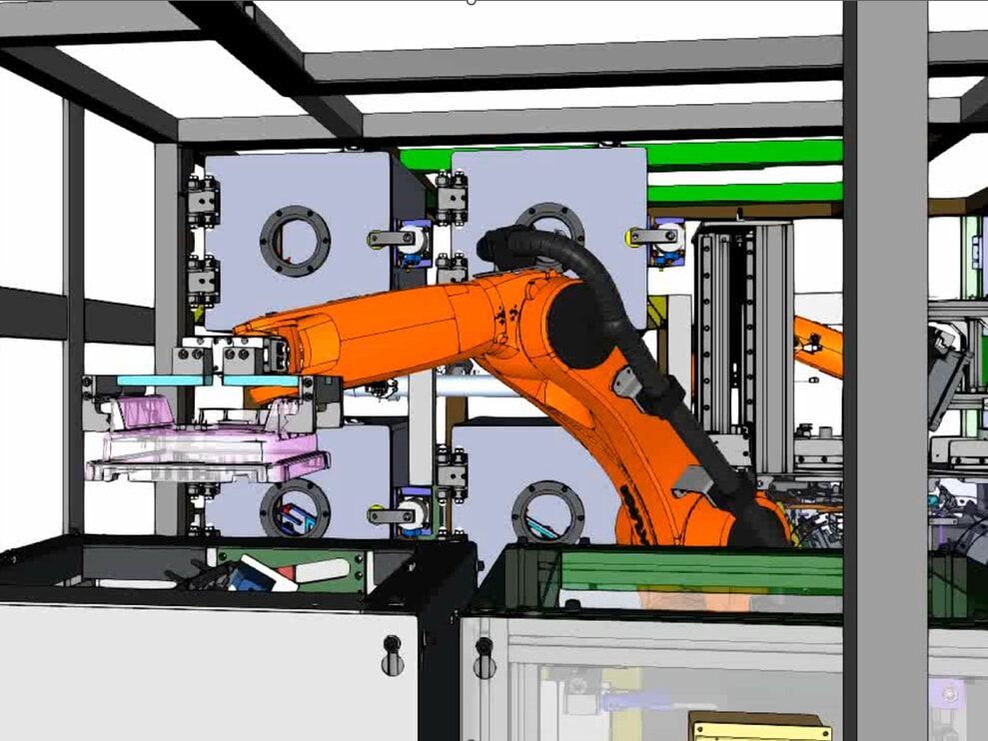
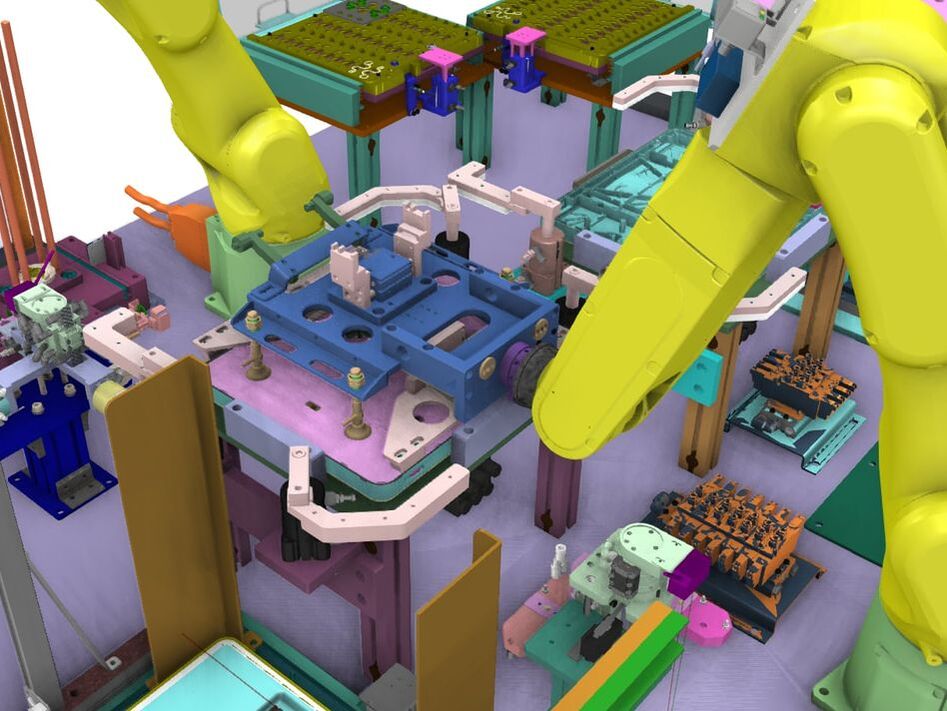
Plan the automation equipment and simulate the system in VC, and present the proposal in 3D.
Specification
Discuss requirements and converge on a specification; agree delivery and acceptance criteria and issue the specification agreement.
Quotation and order
Provide the quotation, review specification and price, agree terms, and confirm the order.
Design and build
Design, machining, assembly, programming and teaching, followed by delivery and acceptance.
Simulation Service
Simulation service projects
Not sure how to plan a new line? Worried the finished design won't deliver the throughput or the machine count is wrong? We answer that with Visual Components simulation — and deliver a full analysis report once it's done, so decisions can be made fast.
Mechanism analysis
Verify equipment motion and takt time; find interferences and bottlenecks.
Material flow simulation
Quantified assessment of transport routes, buffers and output.
Operator work
Simulate human-machine collaboration and workload distribution.
Robot systems
Validate paths, utilisation and offline programming (OLP).